Saturday, April 7, 2018
Good heritage stats are hard to find, 3rd edition
For those who have not yet subscribed on the UWaterloo Heritage Resources Centre website, or have had technical difficulties subscribing, this post from April 5, 2018 is here: https://uwaterloo.ca/heritage-resources-centre/blog/post/good-heritage-stats-are-hard-find-3rd-edition.

Monday, March 19, 2018
A Tax Class for Heritage Gets the Cold Shoulder
For those who have not yet subscribed on the UWaterloo Heritage Resources Centre website, or have had technical difficulties subscribing, this post from March 16, 2018 is here:
https://uwaterloo.ca/heritage-resources-centre/blog/post/tax-class-heritage-gets-cold-shoulder.
https://uwaterloo.ca/heritage-resources-centre/blog/post/tax-class-heritage-gets-cold-shoulder.
It’s in the Bag: A Tax Class for Culture Hubs
For those who have not yet subscribed on the UWaterloo Heritage Resources Centre website, or have had technical difficulties subscribing, this post from February 20, 2018 is here:
https://uwaterloo.ca/heritage-resources-centre/blog/post/its-bag-tax-class-culture-hubs.
https://uwaterloo.ca/heritage-resources-centre/blog/post/its-bag-tax-class-culture-hubs.
Friday, February 9, 2018
OHA+M moves to Waterloo
In “The Blog Takes a Bow” late last year I signalled that OHA+M would be relocating to the website of UWaterloo’s Heritage Resources Centre. Well, c’est arrivé!
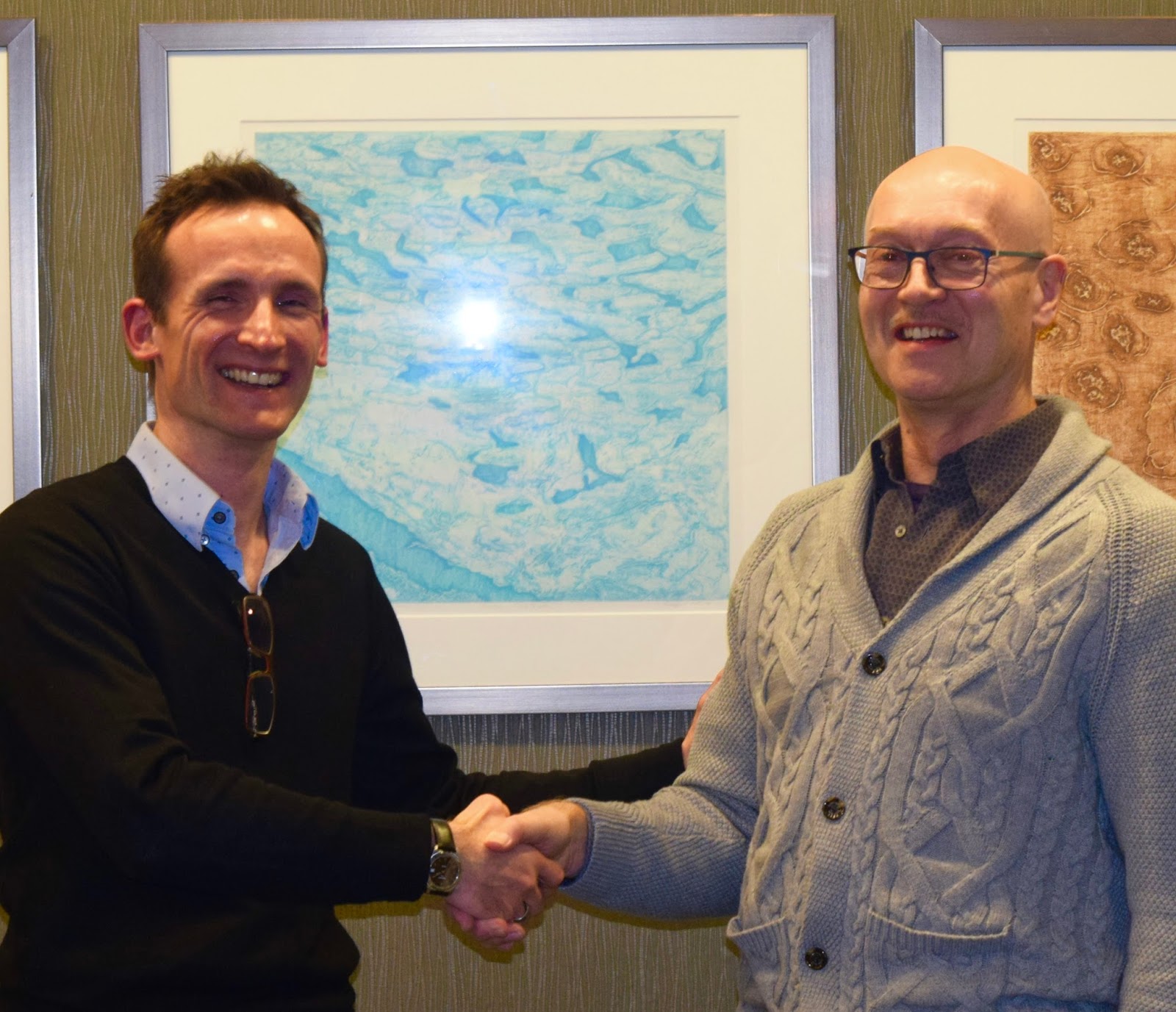 |
| Heritage Resources Centre Director Michael Drescher and blogger Dan Schneider mark the new HRC-OHA+M alliance in Waterloo last month. |
The hosting of the blog by the HRC was announced January 15 at the HRC’s annual general meeting in Waterloo.
Check out OHA+M at its new home here.
It goes without saying that I am thrilled by the move and the opportunity it represents.
I launched the blog three years ago, during Heritage Week 2015, with an article marking the 40th anniversary of the Ontario Heritage Act and the tenth anniversary of the 2005 overhaul of the act. With new articles every few weeks, the blog now boasts more than 70 posts on a wide range of topics. The focus from the start has been Ontario’s legal and policy framework for cultural heritage as well as current public policy initiatives and issues.
Let’s face it, serious discussion of heritage policy can be a bit dry and technical analysis of legislation, in particular, can make the eyes roll. While I try to keep things engaging — and occasionally take a break from the “heavy stuff” altogether — OHA+M is not for all tastes. A friend (?) recently referred to the blog as bigyawn.com! Haha.
Okay, it is a blog for heritage policy wonks. And, within that niche audience, the reception has been very gratifying. OHA+M has come to be seen as a respected source of information and commentary. Last October the blog earned its creator and blogger an Award of Excellence for Heritage Education, Awareness and Scholarship from the Canadian Association of Heritage Professionals.
The new association with the Heritage Resources Centre is a great fit for OHA+M.
Many of you will be familiar with the centre and its former director, Robert Shipley. Robert retired last year, although continues to be involved with the HRC. The new director, Michael Drescher, is committed to strengthening the HRC’s mandate. That mandate, according to the website, is “to promote a better understanding of natural and human heritage for the improvement of planning management and public policy, through research, education, and extension work.”
Michael says the collaboration on OHA+M “will expand the HRC’s role as ideas generator and centre for the discussion and debate of heritage legislation, policy and issues.”
For my part the commitment of the HRC to house, manage and promote OHA+M marks a major turning point and takes the blog to a whole new level. I’m excited to see how this works out.
What will change, besides a different address and new look? Not much from the reader's standpoint. But we do expect the commenting function will be friendlier, making it easier for readers to share their thoughts. If you’ve never commented on something you liked, didn’t agree with, or thought something more could be said — why not give it a try?
What you need to know: The “old” blog at the blogspot address will continue to exist but will essentially go dormant. This will be the last post to that site. From now on new posts will go up at the new HRC address, where all previous posts can also be found.
To continue to receive new posts, followers and subscribers of the blog (or me) will need to re-subscribe using the RSS Notifier app (at the upper right on the new home page).

Sunday, January 21, 2018
... and ahead in 2018
As for 2018, here are some things to watch for.
The Trudeau government’s reaction to the ENVI report

The report of the Committee on Environment and Sustainable Development came down on December 8. Minister McKenna has 120 days to respond.
The report is a strong one and contains a set of 17 excellent recommendations for government action. There is no reason the government should not move on all of them.
The National Trust for Canada, which is leading on the file, isn’t idly counting down until April. It has written a letter to the Minister, to be endorsed by umpteen heritage sector organizations across the country, identifying a number of priorities that can be acted upon quickly and urging that the 2018 federal budget include measures that will encourage investment in the revitalization of historic places (particularly tax-based incentives and grants/contributions). The letter also requests a meeting with the Minister to discuss and assist.
The government has a once-in-a-generation opportunity here. Will they take it?
Rollout of changes to the OMB

Every one interested in planning and heritage is watching — and wondering — how this will play out.
Bill 139, which (among other things) converts the Ontario Municipal Board to the Local Planning Appeals Tribunal and makes changes to its scope and powers, received royal assent last month. By my analysis there is less here than meets the eye, but there will be real implications for our planning appeal system, even if these are more than a little unclear at this point.
While the legislation is a done deal, it’s not yet in force. The changes come into effect “on a day to be named by proclamation of the Lieutenant Governor.” Having legislation take effect on proclamation is done to give the government time to put the needed administrative infrastructure in place. For example, Bill 139 creates a new agency, the Local Planning Appeal Support Centre, which will provide support services (including information on land use planning, guidance on tribunal procedures, and advice or representation) with respect to Planning Act matters under the jurisdiction of the OMB/Local Planning Appeals Tribunal. This agency will have to be set up.
Apparently there has been a great surge in planning applications by those anxious to get in under the wire and have their applications considered under the current system. The government has set rules for the transition. [1]
The new system is supposed to be in place by the spring. Given the transition rules it is unlikely the first appeals will be heard by the LPAT until late in the year. So we won’t get a sense how this is really working until 2019.
Heritage as an issue in provincial and municipal elections


The question is really whether heritage will — or won’t — be an issue in the 2018 elections at the provincial and local levels. The answer may depend on people like you.
What questions would you put to the candidates?

Also on my radar for 2018 will be:
- the results of the efforts, led by Mohawk College instructor and old windows champion Shannon Kyles, to get the province to change its energy conservation incentive programs to include the restoration of existing window and doors,
- the Ministry of Tourism, Culture and Sport’s long-awaited new guide to heritage resources in the land use planning process, and
- new appointments to the Conservation Review Board.
 |
| Shannon Kyles, drill in hand |
Note 1: The rules are:
- appeals that are already before the OMB as of the date of Royal Assent (December 12) would be subject to the existing rules and would be heard by the Ontario Municipal Board
- appeals made after the new rules are proclaimed into force (date unknown at this point — likely April) would be subject to the new rules and heard by the new Local Planning Appeal Tribunal
- appeals of matters between the date of Royal Assent and the date that the new rules are proclaimed:
- would be heard by the Ontario Municipal Board if the planning matter began (e.g. the complete application was received) before the date of Royal Assent; and
- would be heard by the Local Planning Appeal Tribunal if the planning matter began after the date of Royal Assent.
Friday, January 5, 2018
Looking back at 2017 ...
Happy New Year!
Since everyone else is doing it — ruminating on the old year left behind and prognosticating on the one just launched — I suppose I should too.
For 2017, here are my top three heritage highlights.
Steve Otto’s appointment to the Order of Canada
Just as the year ended, long-time heritage stalwart Steve Otto received the county’s highest accolade. The citation for his appointment as a Member of the Order of Canada reads: “For his sustained advocacy in support of heritage conservation and for his contributions to preserving and promoting Ontario’s buildings and architecture.”


For those who don’t know Steve, there is more on his background and accomplishments on the Architectural Conservancy Ontario website here.
I first got to know Steve when I joined the then-Ministry of Culture and Recreation in 1980. Steve was the first executive director of the Heritage Conservation Division. (Imagine a whole division devoted to heritage — how times have changed; but then the the work of the division encompassed Ontario Heritage Foundation (now OHT) programs as well as ministry heritage programs.) Until his departure in 1981 or so to work on an Ontario bicentennial project, Steve was the boss of Larry Ryan, the manager of the Heritage Trust unit, who was my boss.
Steve was/is famously meticulous and I can still conjure up his trademark little notes to staff, well-crafted in black ink, suggesting follow-up on this or that. He may have found his true calling later doing historical research — Anthony Adamson once called him a “ferret” for his ability in this respect — and as a writer and advocate.
I remember Steve as a strong promoter of the fledgling OHF heritage easements program (my bailiwick). I fondly recall his counselling me not to say that we “took” easements on properties. One “took” snuff, said Steve; one acquired easements.
Hearty congratulations, Steve.
 |
| Steve with friend Lynne DiStefano, St. Marys, 1995 |
The little bill that (almost) could
It’s been quite a ride — much of it documented in these pages — for Peter Van Loan’s private member’s bill to introduce incentives for heritage conservation into our tax system.
Mr. Van Loan, the Conservative Critic for Canadian Heritage and National Historic Sites, launched the bill in December 2016. Having survived a Second Reading vote last March, it got taken up by the House of Commons Standing Committee on Environment and Sustainable Development (ENVI) in the fall. But it died when the committee decided at the end of November not to proceed with it.
Mr. Van Loan, the Conservative Critic for Canadian Heritage and National Historic Sites, launched the bill in December 2016. Having survived a Second Reading vote last March, it got taken up by the House of Commons Standing Committee on Environment and Sustainable Development (ENVI) in the fall. But it died when the committee decided at the end of November not to proceed with it.
Bill C-323 would have amended the Income Tax Act to create a 20% tax credit for the costs of rehabilitation of recognized historic places. It would also have provided an accelerated capital cost allowance for capital expenditures incurred in rehabilitation projects.
As the National Trust for Canada noted, passage of the bill would have been a real game-changer for built heritage in this country. But, while that was not to be, the bill still had quite an impact.
Coming seemingly out of nowhere, the bill prompted much discussion and debate — inside and outside the House — on Canada’s cultural heritage, the federal government’s part in its conservation and the efficacy of heritage tax measures in particular. Generating widespread support from heritage advocates nation-wide, the bill was a major catalyst for a study on all of the above by the ENVI committee, which resulted in its landmark report Preserving Canada’s Heritage: The Foundation For Tomorrow, released in early December. A report which ironically includes a strong recommendation for tax incentives.
Hats off to Peter Van Loan for this important and valiant effort.

The Gore Park miracle
Miracle may be overstating just a bit, but it came as a wonderful surprise when the developers of the historic Gore Park buildings in downtown Hamilton decided in November to … save them all. (All the façades, that is.) This after Hamilton city council voted last January to approve their application for complete demolition of two of the four designated structures.
Assuming follow-through, we have a happy ending to one of the province’s highest-profile and highest-stakes heritage controversies, a five-year saga going back to 2012.
 |
| The four Gore Park buildings with 24 and 28 King St. W. on left |
 |
| 24 - 28 would have been replaced by this |
Assuming follow-through, we have a happy ending to one of the province’s highest-profile and highest-stakes heritage controversies, a five-year saga going back to 2012.
According to news reports, the developers credit their change of heart to a “third party consultant” who showed them a way to preserve the façades of the doomed buildings that hadn’t previously been considered. (Okay, let’s find this guy/gal and get them to weigh in on every other situation where we’re told that a building is too far gone and not even the façade can be saved.)
Kudos to the developers (and their consultant) for this sensible and character-preserving result. And special kudos to the Friends of the Gore who campaigned tirelessly for the preservation of the Gore Park buildings, including promoting a change.org petition.
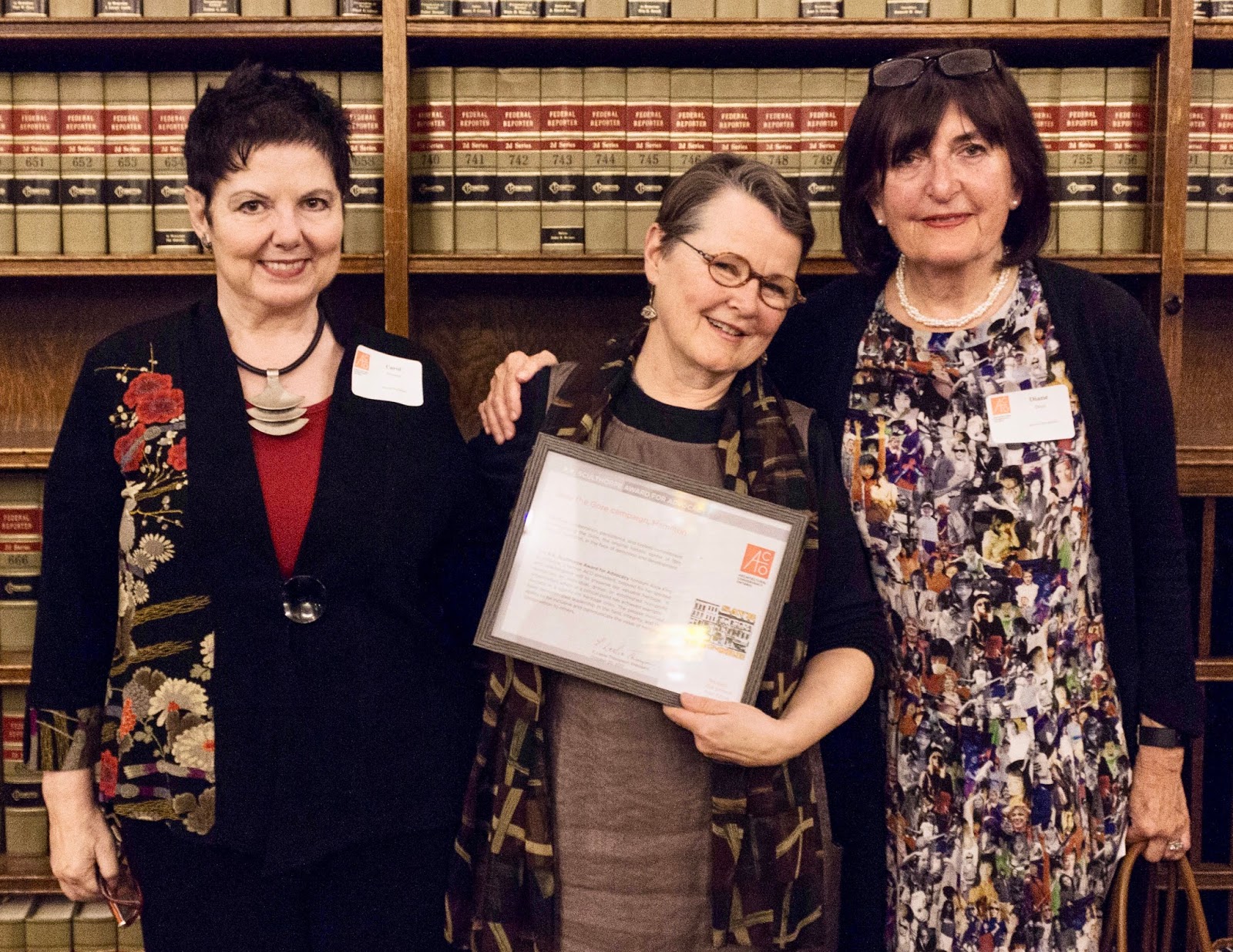 |
| Friends of the Gore Carol Priamo (left) and Diane Dent (right) receiving an
advocacy award from Cathy Nasmith at the October 2017 ACO awards dinner
Photo: Stephanie Mah
|
Time to get on with a Gore Park HCD!
Did I say three highlights of 2017 ... can we squeeze in one more?
The restoration and reopening of the Brockville railway tunnel
Last August Brockville proudly reopened its magnificent old railway tunnel under the downtown. The project involved a complete restoration of the 525 metre-long structure, with some added bells and whistles.
I have just two words for this project — WOWWY ZOWWY! Put Brockville on your list for 2018.
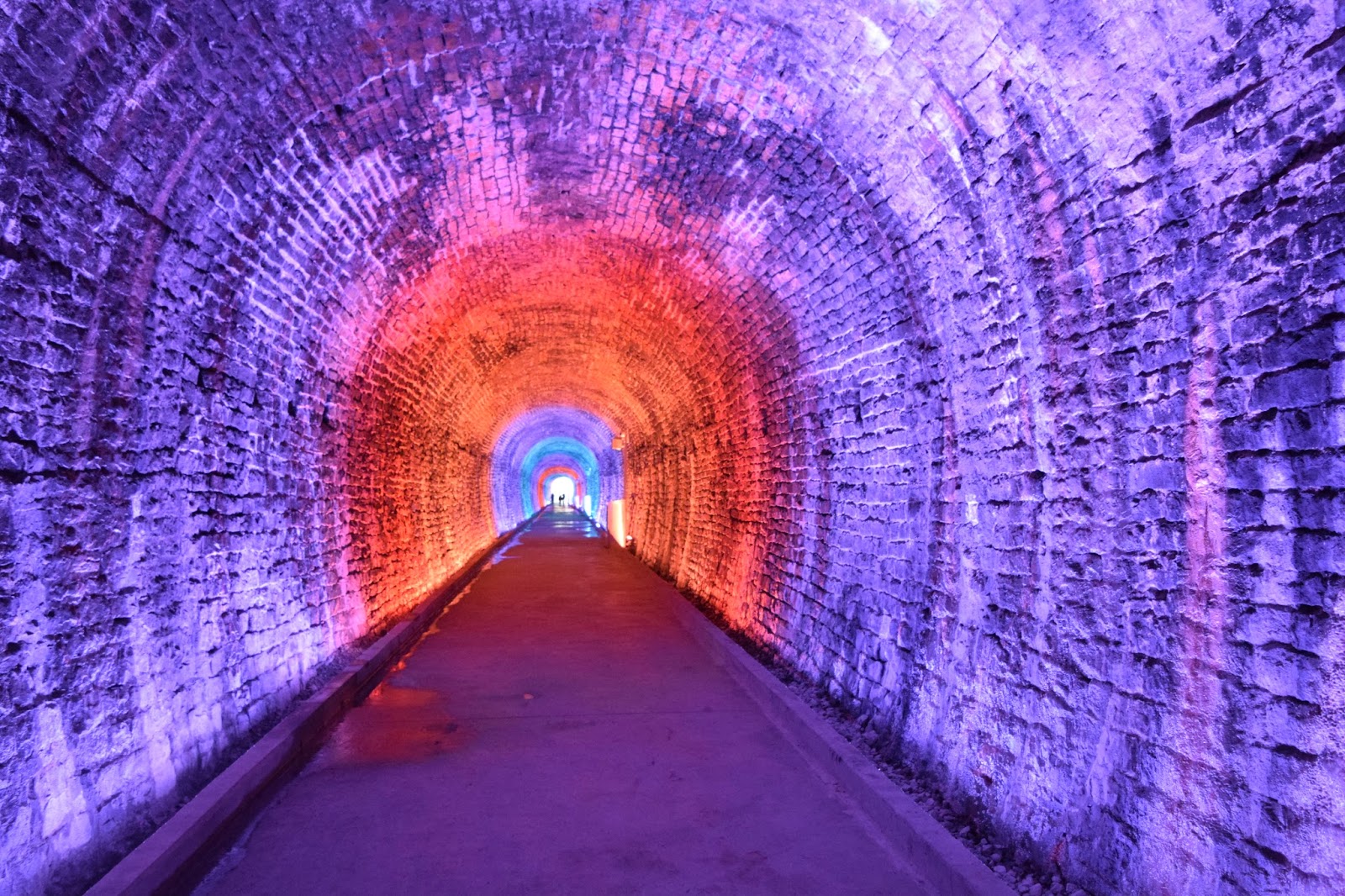 |
| Brockville railway tunnel |
Coming shortly: what to watch for in 2018.
Friday, December 8, 2017
Bill C-323 dies — a sacrificial lamb?
Sacrificial lamb: someone or something that suffers so that someone or something more important can succeed ~ Macmillan Dictionary
Suffers — or in the case of Bill C-323, An Act to amend the Income Tax Act (rehabilitation of historic property) — dies.
Today, there’s good news and bad news. Well, I’ve already told you the bad news.

Last week the House of Commons Standing Committee on Environment and Sustainable Development (ENVI) effectively pulled the plug on Bill C-323. It happened just as the committee was about to start clause-by-clause consideration of the bill (the usual last step before reporting a bill back to the House). John Aldag, Liberal MP for the B.C. riding of Cloverdale — Langley City, made a motion that the committee recommend that the House not proceed further with the bill. The motion passed (the Liberal members voting for it, the opposition members against) — and that was that. [1]
The full House will have the final say, and apparently can debate the matter for an hour, but there can be no doubt of the result.
Bill C-323 — a private member’s bill proposed by Peter Van Loan, an opposition member, and one that would have had an impact on tax revenues — was always going to be a long shot. It’s remarkable that it made it this far. [2]
It’s clear the Liberals on the ENVI committee (all of whom had voted for the bill at Second Reading, except for one who didn’t vote) had mixed feelings about the demise of the bill. The motion/report begins: “The Committee is supportive of the principle of Bill C-323 and believes that financial incentives, including tax credits, which encourage investment in the rehabilitation of historic properties and heritage places is necessary; however ….”
There then follows a list of concerns with the bill. Most of the concerns the government had expressed earlier during the Second Reading debate. Chief among these are:
- “tax changes undertaken outside the [annual] budget process make it more difficult to ensure a coherent and consistent approach to fiscal management”
- unclear effect on federal revenue (the Parliamentary Budget Officer assessed costs at $55 to $67 million in the first five years; officials from the Department of Finance stated it could be as high as $90 million a year) — Mr. Aldag later referred to the bill as a “deluxe model”, suggesting perhaps that it was too broad in terms of the number and kind (commercial and residential) of eligible properties
- the cost to the government of administering the tax credit.
A new concern was also raised: The lack of consultation and collaboration on the measures in the bill with provinces and territories, as well as municipal and Indigenous governments.
This point is a good one, especially as, in our harmonized income tax regime, the provinces and territories would end up incurring a (small) part of the cost of any tax credit claimed.
On the bigger issue of the impact on revenue: In introducing his motion to kill the bill, Mr. Aldag had mentioned a nagging question — whether claims that the tax credits might actually make more money for the treasury than they cost were justified. The ENVI committee had heard evidence from both the National Trust for Canada and the National Trust for Historic Preservation that the U.S. historic tax credit, the model for Bill C-323, returned $1.20 to $1.25 of tax revenue resulting from commercial rehabilitation projects for every $1.00 paid out. But it also heard some skepticism about this. The Department of Finance folks questioned whether the “incremental benefit” of the credit to revenues might be less, in that some of the projects that made use of the credit might have been built anyway, and would therefore have generated tax revenue without the tax credit.
As I see it, while this question might be interesting for further study, it is largely beside the point. Some projects for rehabilitation of historic buildings might go ahead without the tax incentive, but they might not be as large or comprehensive as they would have been with access to the incentive. And without the accountability measures that go along with historic tax credits projects almost certainly wouldn’t be as respectful of heritage features.

And then there is:
As I see it, while this question might be interesting for further study, it is largely beside the point. Some projects for rehabilitation of historic buildings might go ahead without the tax incentive, but they might not be as large or comprehensive as they would have been with access to the incentive. And without the accountability measures that go along with historic tax credits projects almost certainly wouldn’t be as respectful of heritage features.
Even if a heritage tax credit returns only half of what it costs, that is still a lot more than most tax credits!
And then there’s the considerable spin-off effects of rehabilitation projects in their neighbourhoods and communities. The Finance folks didn’t look at that. As Conservative members of the committee later complained: “… [T]heir analyses neglected to analyze the economic spinoffs such measures would have on the Canadian economy and the additional tax revenues such economic activity would generate.”

Now for the good news!
You may recall that the ENVI committee examined Bill C-323 as part of a bigger study of the federal role in heritage. The committee’s report, “PRESERVING CANADA’S HERITAGE: THE FOUNDATION FOR TOMORROW” was released a few days ago, on December 4th. Please, please have a look! [3]
The report has 17 terrific recommendations, including:
- the federal government introduce legislation to, among other things, provide a statutory underpinning for the protection for federal heritage buildings; bring federal Crown corporations (like Canada Post and the CBC) under the Federal Heritage Buildings Review Office (FHBRO) policy and purview; and ensure that federal actions do not adversely effect national historic sites or properties and buildings designated by provinces and municipalities (gold star for that one!)
- the government adopt a “heritage first” policy requiring federal departments and agencies to, when appropriate, give preference to existing heritage buildings when considering leasing or purchasing space
- the government restore the funding level for the National Cost-Sharing Program to a minimum of $10 million a year (this program, for work on national historic sites, is chronically oversubscribed and is scheduled to return to a measly $1 million in funding next April)
- the government consider supporting a main streets initiative modelled on Main Street America to encourage public and private investment in commercial historic buildings in rural areas and small cities (Main Street America is a program of the National Main Street Center, an offshoot of the National Trust for Historic Preservation)
- the government support an Indigenous-led initiative that would be responsible for determining how places that are important to Canada’s Indigenous peoples should be protected and preserved, and for enhancing the capacity of Indigenous communities to preserve places important to them
And then there is:
- the federal government establish a tax credit for the restoration and preservation of buildings listed on the Canadian Register of Historic Places
Sound familiar?! [4] A phoenix arising from the ashes of Bill C-323?
But this one, like all the other good things in the report, is just a recommendation — not yet a real bill or policy or funding commitment.
 |
| Hon. Catherine McKenna |
The Minister of Environment and Climate Change, Catherine McKenna, has 120 days to respond to the ENVI committee’s report. So until about April 1, 2018.
She could just come back with: “Very nice, thanks so much.”
The Minister needs to know that people all across the country want to hear a clear and earnest commitment to act on the report. Heritage groups Canada-wide need to speak up with one voice.
The National Trust for Canada is orchestrating just that. [5]
Stay tuned.
Note 1: The ENVI committee’s brief report on the bill is here.
Note 2: OHA+M has devoted a lot of ink to Bill C-323 and its progress. See “Finally, a federal tax incentive for heritage?” and several later posts.
Note 3: The ENVI report is here.
Note 4: One can’t help sympathizing with the sentiments of the Conservative Party (in its dissenting opinion on the report, on page 65):
The Conservative Members of the Committee … question how the Liberal Members can simultaneously recommend the establishment of a federal tax credit for the restoration and preservation of buildings listed on the Canadian Register of Historic Places in Recommendation 11 and reject Bill C-323 which accomplishes exactly that objective. This is particularly surprising in light of the fact that a number of Liberal Members have publicly spoken out in favour of exactly such a tax credit program. We are disappointed that the Liberal Members of the Committee appear to have been instructed by the Office of the Minister of Environment and Climate Change to vote against this critical tool for protecting Canada’s historic sites.
Note 5: For the latest updates see https://nationaltrustcanada.us11.list-manage.com/track/click?u=5dd5f9c97cc4e7df3f1a5d21d&id=125d25bad6&e=33db282bb9.
Subscribe to:
Posts (Atom)